


As a leading supplier of tower rides, I often get asked about the intricate workings of the braking systems in these thrilling attractions. Tower rides, such as the Funtime Drop Tower, 83m Gyro Tower, and Twin Drop Tower, offer riders an exhilarating experience of free - fall and rapid deceleration. The braking system is a critical component that ensures both the safety and the enjoyment of the riders.
The Basics of Tower Ride Braking Systems
The primary function of a tower ride's braking system is to slow down and stop the ride vehicle safely after the free - fall or high - speed movement phase. There are several types of braking systems commonly used in tower rides, each with its own advantages and characteristics.
Friction Brakes
Friction brakes are one of the most traditional types of braking systems used in tower rides. They work on the principle of creating friction between two surfaces to convert the kinetic energy of the moving ride vehicle into heat energy. In a tower ride, friction brakes usually consist of brake pads and a braking surface. The brake pads are pushed against the braking surface, which could be a rail or a disk attached to the moving part of the ride.
When the ride needs to slow down, a hydraulic or pneumatic system applies pressure to the brake pads, causing them to grip the braking surface tightly. The frictional force generated between the brake pads and the surface opposes the motion of the ride vehicle, gradually reducing its speed. However, friction brakes have some limitations. Over time, the brake pads can wear out due to the high - intensity friction, which requires regular maintenance and replacement.
Eddy Current Brakes
Eddy current brakes are a more modern and advanced type of braking system used in many tower rides today. They operate based on the principle of electromagnetic induction. When a conductive material (usually a metal plate) moves through a magnetic field, eddy currents are induced in the material. These eddy currents create their own magnetic fields that oppose the original magnetic field, resulting in a braking force.
In a tower ride, eddy current brakes typically consist of a series of permanent magnets and a conductive plate attached to the ride vehicle. As the vehicle moves past the magnets, eddy currents are generated in the plate, creating a braking force that slows down the vehicle. One of the main advantages of eddy current brakes is that they have no physical contact between the braking components, which means there is no wear and tear. This reduces maintenance requirements and increases the reliability of the braking system. Additionally, eddy current brakes can provide a smooth and controlled deceleration, enhancing the rider experience.
Hydraulic Brakes
Hydraulic brakes are another common type of braking system used in tower rides. They rely on the transmission of force through a fluid (usually hydraulic oil) to apply the braking force. A hydraulic brake system consists of a master cylinder, brake lines, and brake calipers. When the braking system is activated, a piston in the master cylinder is pushed, forcing the hydraulic fluid through the brake lines to the brake calipers.
The brake calipers then squeeze the brake pads against the braking surface, creating the necessary frictional force to slow down the ride vehicle. Hydraulic brakes are known for their high - power braking capabilities and precise control. They can be adjusted to provide different levels of braking force depending on the speed and weight of the ride vehicle. However, hydraulic brakes require regular maintenance to ensure the proper functioning of the hydraulic system, including checking for leaks and maintaining the correct fluid level.
Braking System Design and Safety Considerations
The design of a tower ride's braking system is a complex process that takes into account many factors to ensure the safety and performance of the ride.
Redundancy
Safety is of utmost importance in the design of tower ride braking systems. One of the key safety features is redundancy. A redundant braking system means that there are multiple independent braking mechanisms in place. In case one braking system fails, the other systems can still stop the ride vehicle safely. For example, a tower ride may be equipped with both friction brakes and eddy current brakes. If the friction brakes malfunction, the eddy current brakes can still provide the necessary braking force to bring the ride to a stop.
Braking Force Calculation
The braking force required for a tower ride depends on several factors, including the weight of the ride vehicle, the maximum speed of the ride, and the desired deceleration rate. Engineers use complex mathematical models and simulations to calculate the exact braking force needed. They also consider factors such as the coefficient of friction (for friction brakes), the strength of the magnetic field (for eddy current brakes), and the hydraulic pressure (for hydraulic brakes).
Emergency Braking
In addition to the normal braking system, tower rides are also equipped with an emergency braking system. The emergency braking system is designed to stop the ride vehicle immediately in case of an emergency, such as a power failure or a mechanical malfunction. Emergency brakes usually have a fail - safe design, which means they are activated automatically when a problem is detected. For example, in some tower rides, the emergency brakes are held in the "off" position by an electrical or hydraulic system. If the power or hydraulic pressure is lost, the emergency brakes are engaged by a spring - loaded mechanism.
Maintenance and Testing of Braking Systems
Regular maintenance and testing are essential to ensure the proper functioning of a tower ride's braking system.
Maintenance
Maintenance of the braking system includes inspecting the brake components for wear and tear, checking the hydraulic or pneumatic systems for leaks, and lubricating moving parts if necessary. For friction brakes, the brake pads need to be replaced when they reach a certain level of wear. For eddy current brakes, the magnets and the conductive plates need to be inspected for any damage or degradation.
Testing
Tower rides undergo regular testing of their braking systems to ensure their reliability. This includes static tests, where the braking system is tested while the ride is stationary, and dynamic tests, where the braking system is tested during actual operation of the ride. During dynamic tests, the ride is operated at different speeds and loads to simulate real - world conditions. The braking performance is measured and compared against the design specifications. If any issues are detected during testing, the braking system is adjusted or repaired before the ride is allowed to operate again.
Conclusion
The braking system of a tower ride is a crucial component that ensures the safety and enjoyment of riders. Whether it's a traditional friction brake, a modern eddy current brake, or a hydraulic brake, each type of braking system has its own unique features and advantages. As a tower rides supplier, we are committed to using the latest technology and design principles to develop reliable and efficient braking systems for our rides.
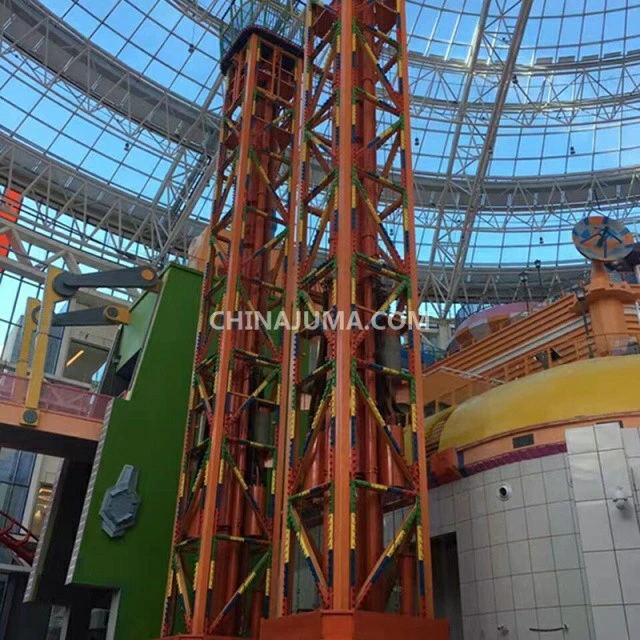

If you are interested in purchasing tower rides for your amusement park or entertainment venue, we invite you to contact us for a detailed discussion. Our team of experts can provide you with more information about our products, including the braking systems, and help you choose the right tower ride for your needs.
References
- "Amusement Ride Safety Standards", International Association of Amusement Parks and Attractions (IAAPA)
- "Engineering Principles of Amusement Rides and Devices", John A. J. Ferreira


